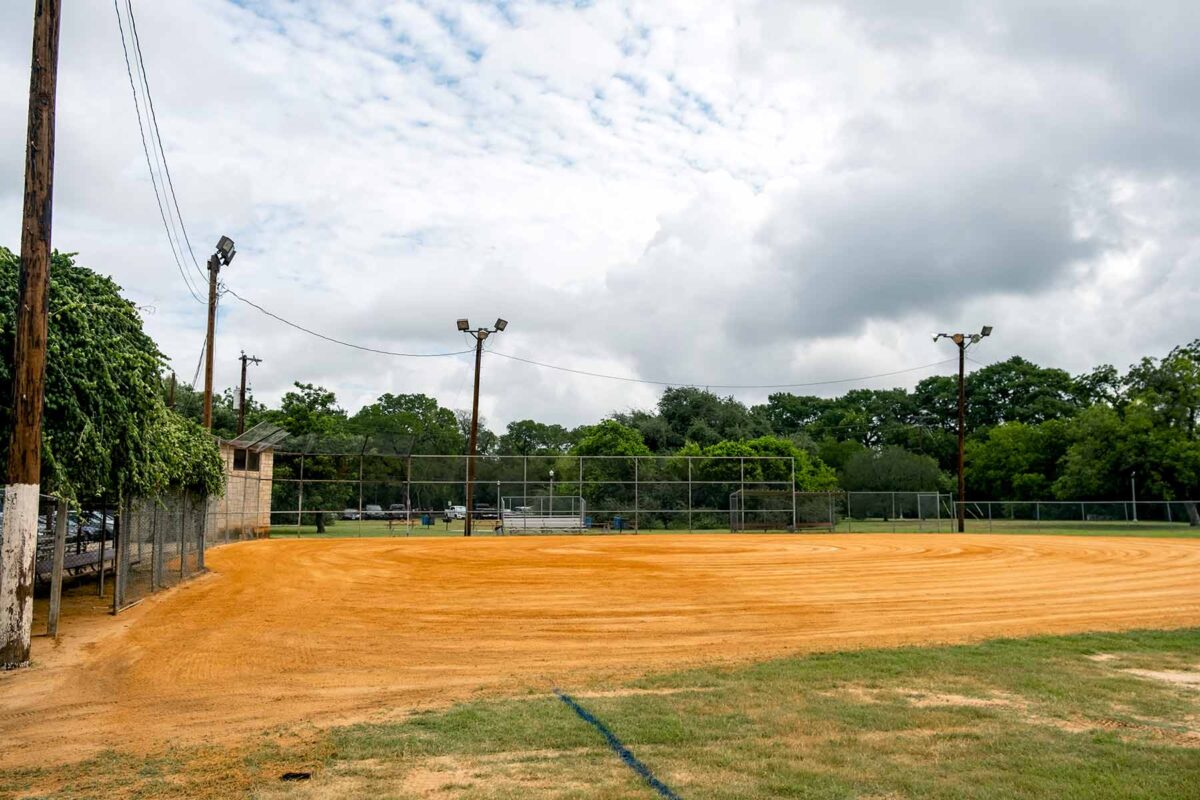
Lambert Beach Softball Field

A softball field is located between the main road and San Antonio River, just below the Dionicio Rodriguez foot bridge. Stone, metal, and wood picnic units are scattered on both sides of the road. The stone units resemble earlier units in the park but were constructed in the 1990s.

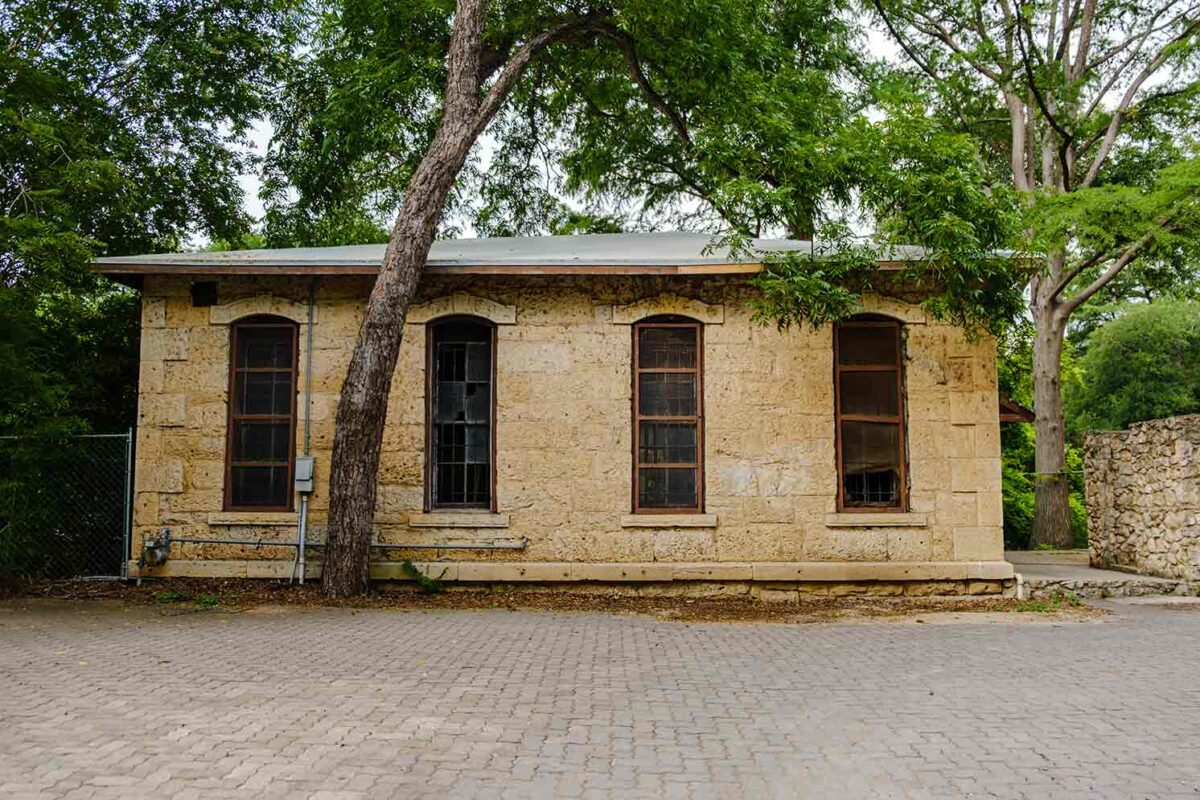
First Water Works Pump House

This pump house is the oldest intact industrial building remaining in San Antonio! Designed to raise water to a reservoir about a mile away (beyond the park boundaries), the building is constructed of smooth‐finished, cut limestone extracted from the city rock quarry. The arches over doors and windows are made of rusticated stone. The low hipped roof is covered with corrugated metal. Tall wooden doors are set in the central entrance arch and there are double‐hung wood sash windows on all elevations. A center column and beam support the pump house as it spans the river. The 650 foot-long raceway exits into the river on the south side of the building. Stone rubble wing walls curve from the building along the river. The interior space is not partitioned and possibly was used as an office for the Water Works. It’s a beautiful, must-see building that looks like it jumped out of a storybook!

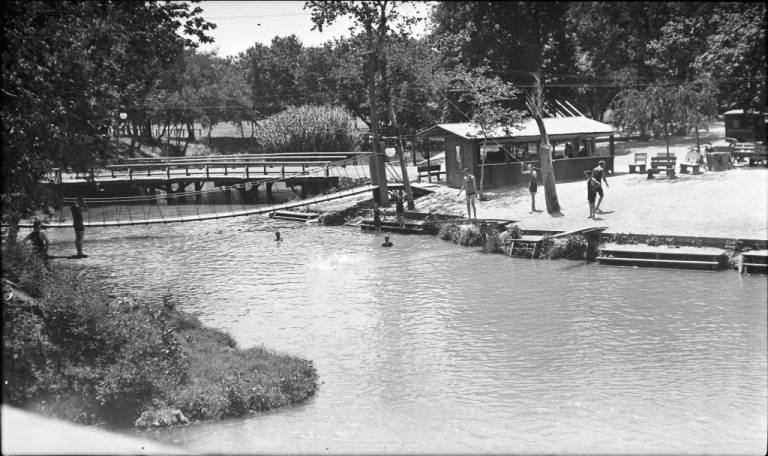
Lambert Beach and Bathhouse

The “beach” is special because it was one of Park Commissioner Ray Lambert’s first projects in Brackenridge Park, and its remodeling and expansion was one of his last projects. In 1915, it was a more natural-looking pool, lined with gravel that was transformed into a more formal swimming pool in 1925, only one year before Lambert’s death. In 1925, concrete stairs and landings were added to provide easy access to the river, and a stone bathhouse replaced rustic dressing rooms. Arched openings on both sides of the building accessed changing rooms. 

The roof of the bathhouse was removed in 1992 when the structure was converted to an open‐air “playscape.” A stone-retaining wall separates the bathhouse from the river level. It is partially collapsed. Stairways leading down to the river and adjoining walkways that allowed swimmers to access the river are badly deteriorated. The directive for the areas are: preserve and rehabilitate the Lambert Beach river walls, acequia walls, and upper labor dam; preserve the lily pond walls and water gates; and rehabilitate and restore the pump house structure.

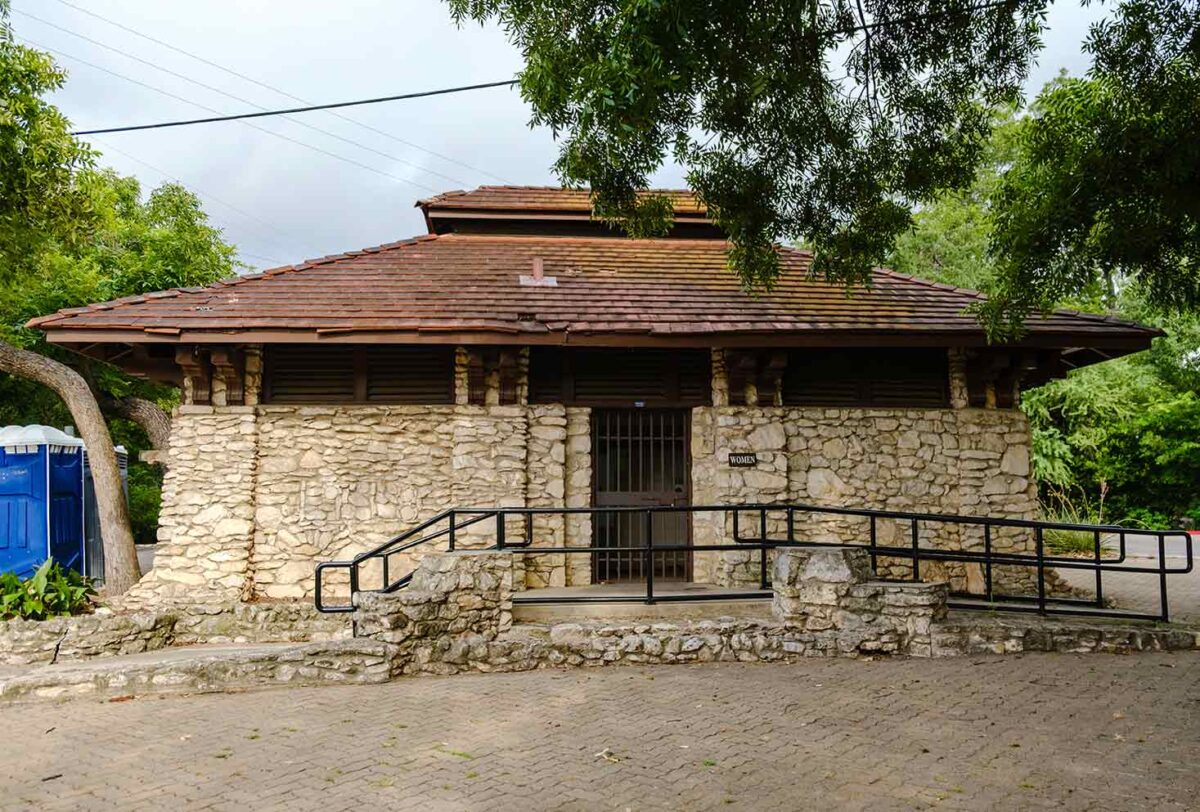
Bathroom Structures

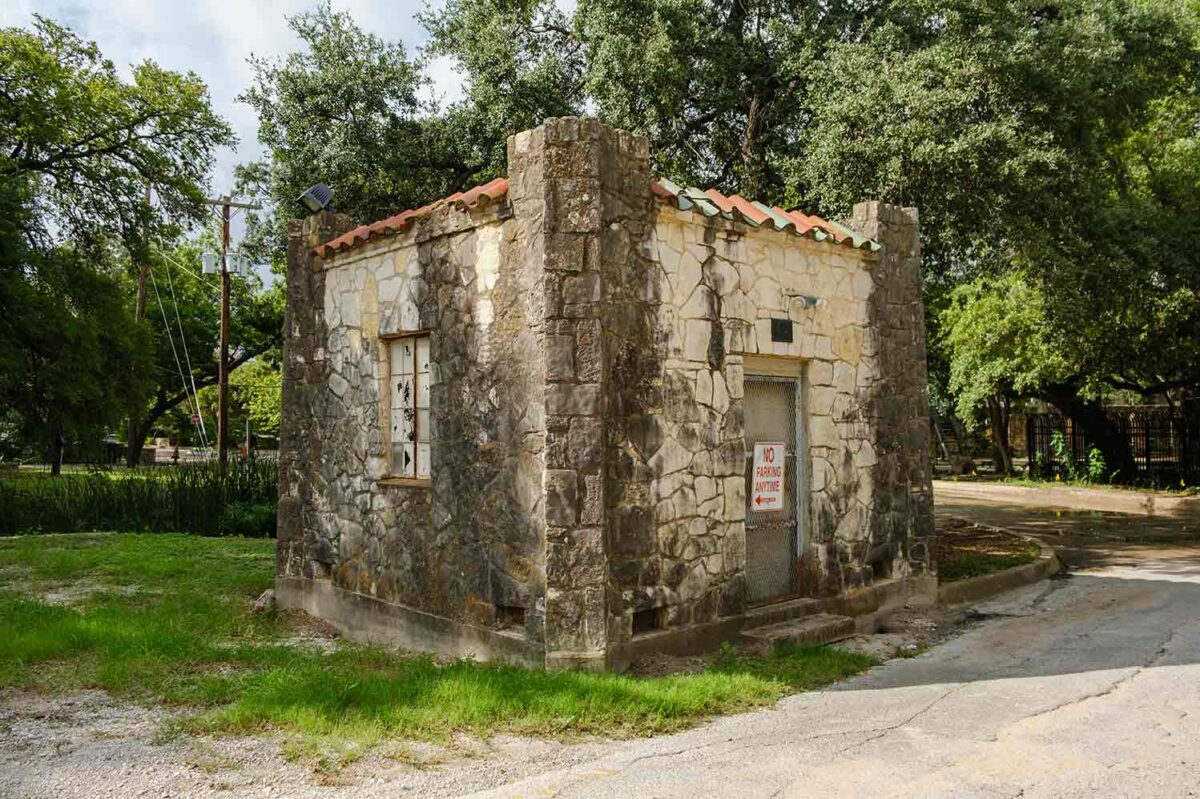
Two almost identical rectangular structures were built to house bathrooms under the administration of Park Commissioner Ray Lambert. The first, originally a men’s restroom, is now used for storage. The second, originally a women’s restroom, has been remodeled to serve both men and women. Both are constructed of stone rubble and feature hipped roofs with projecting eaves and a central louvered ventilation pavilion that rises above the roof level. The first is roofed in red asphalt shingles, and the second is roofed in flat red tile. Both likely were roofed in green barrel ceramic tile, originally.

Electric Pump Station #3

This building was constructed to house an electrically powered pump that sent water to an elevated storage tower. The building has metal casement windows on two sides and is roofed with red and green clay barrel tile. A plaque on the building reads, “City Water Board, Brackenridge Park Electric Pump Station #3, March 1940, Conrad A. Goeth, Chair, Lamar G. Seeligson, Martin C. Giesecke, James A. Gallagher, Maury Maverick, Mayor.” The water works channel, which goes underground, originally carried water to power the adjacent pump house (see No. 10). The bridge over the acequia channel has an arched railing of concrete and stone while the bridge over the water works channel has a stone rail on the north side and no railing on the south side.

Water Works Raceway

The Water Works raceway is a straight, dirt ditch with sloping sides constructed to deliver water from the San Antonio River to the Water Works pump house. As originally constructed, the ditch measured about 40 feet wide and 650 feet long- that’s almost 100 feet longer than The Washington Monument! The raceway was designed with a nine-foot fall that provided power to drive turbines and pumps. Water re‐entered the river at the pump house. Today the raceway is abandoned and dry, but just as large!

Stone Footbridge

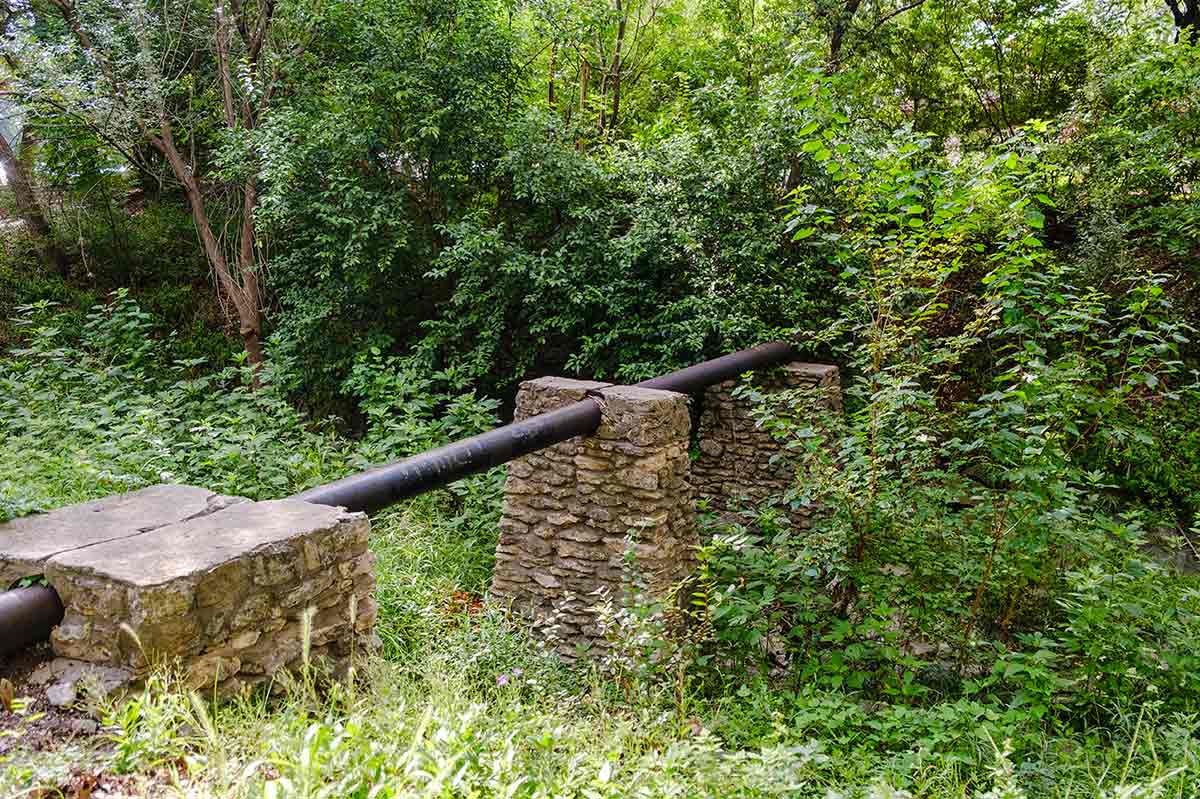
The concrete and stone footbridge is supported on stone rubble arches and features a modern iron railing. The supporting structure dates to the park’s early history and is thought to have been the foundation for an older bridge that connected Madarasz Family Park (now Koehler Park) on the west with Brackenridge Park on the east. It is a beautiful staple of the Park!

Donkey Barn

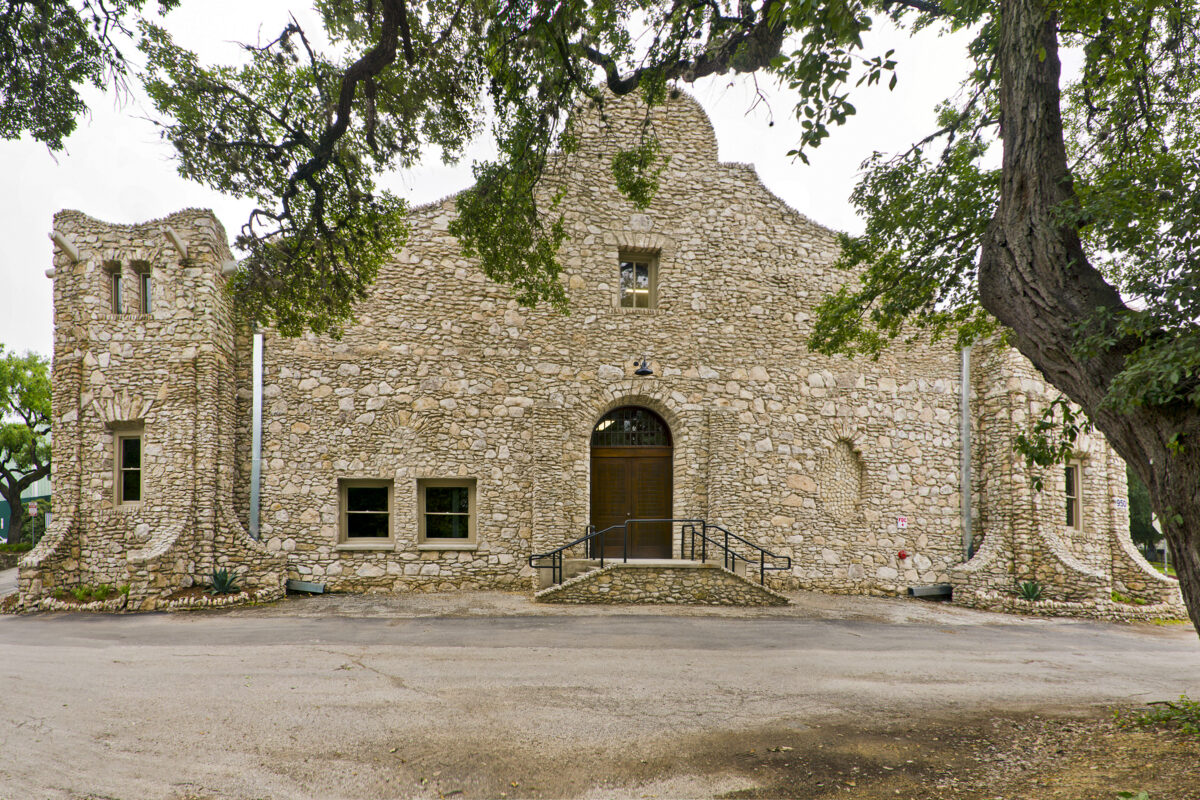
The Donkey Barn is a rubble stone structure, originally constructed c. 1920 as a simple one‐story hay barn for the zoological garden and for donkeys donated by the Rotary Club for children’s rides. A second story with an “Alamo-shaped” facade, was added in 1956 when the building was converted to Parks and Recreation Department offices. It’s perfect for pictures!

Upper Labor Dam and Acequia

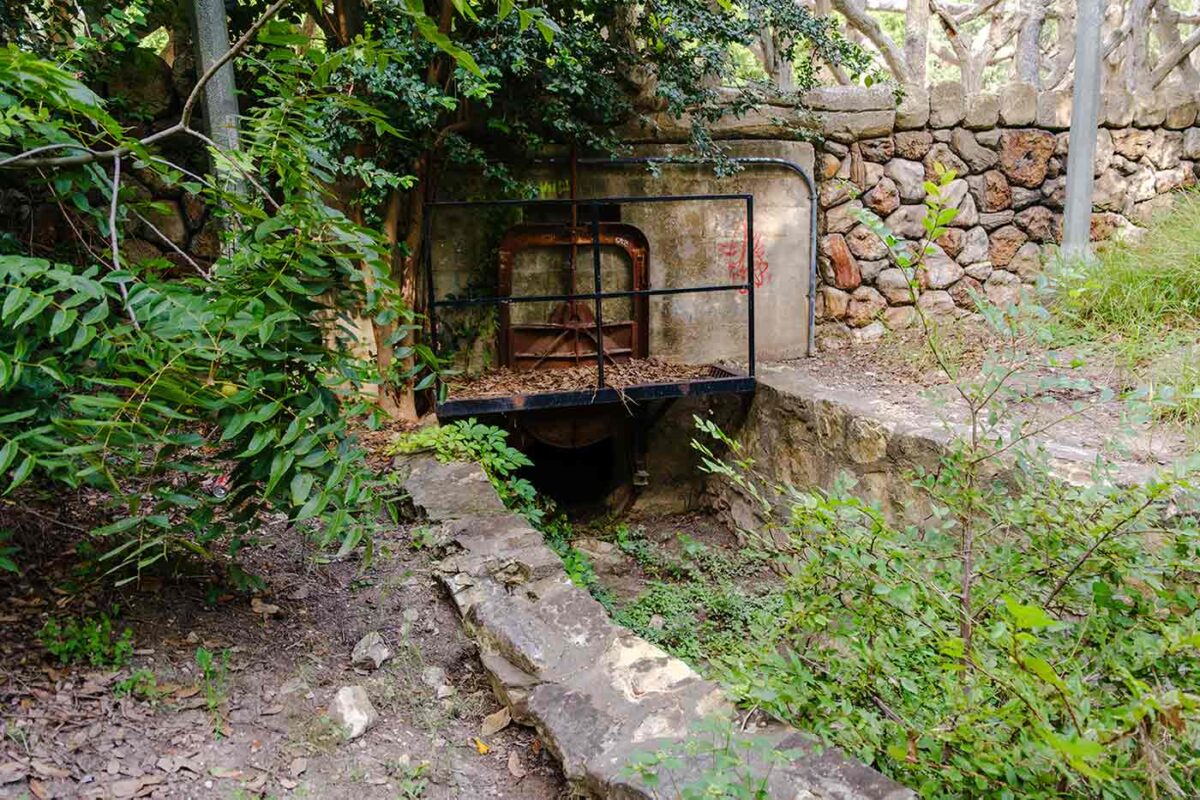
The historic Spanish Colonial Upper Labor Dam was begun in 1776 and diverted water from the San Antonio River into an acequia that watered the Upper Labor farm lands (a block of farm land). Used by the growing civil settlement, the acequia ran through what is today’s park, through the San Antonio Zoo towards San Pedro Creek. During park renovation in the 1990s, the stone dam was partially excavated, documented, and covered for protection. The original stone‐lined acequia channel remains intact, and you can see it in both the Park and San Antonio Zoo! The Lily Pond supplies the water to the acequia, and the lower end of the acequia opens and releases water through the Zoo, which is pretty cool to see. 

The acequia has been around so long that some of the walls are deteriorating and in need of repair. Many large trees have grown up near the walls and have contributed to the wall deterioration as well as surface drainage from paved areas up slope of the acequia. The acequia is composed of grouted stone walls.

Miraflores

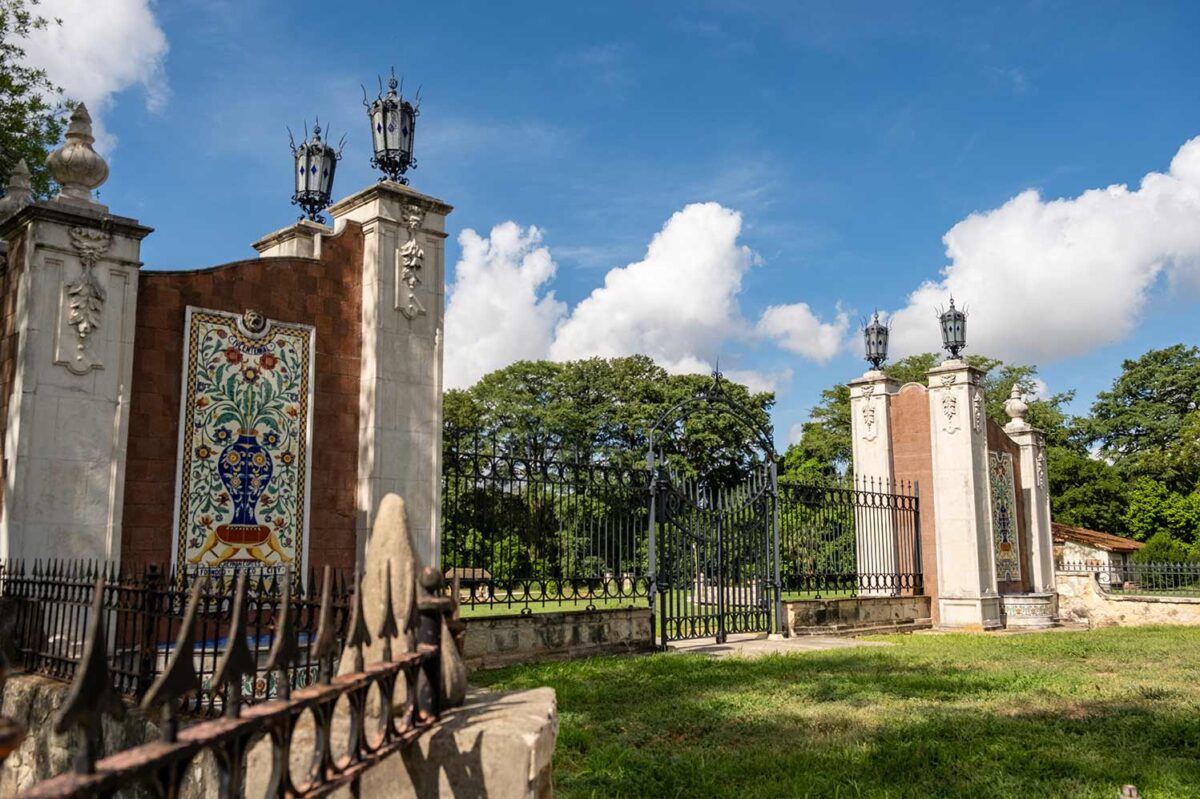
Miraflores is a beautiful outdoor sculpture garden that was listed on the National Register in 2006 and declared a State Archaeological Landmark in 2009. The contemplative garden was built by Dr. Aureliano Urrutia (beginning ca. 1923) as a reminder of his native Xochimilco, Mexico. The garden you see today is thanks to restoration work done in accordance with the regulations of the Texas Historical Commission. 

The entry gate towers have been straightened and reinforced, the lanterns, tile murals, stone wall, and metal fence restored, the stone repaired and cleaned. Damaged and deteriorated ceramic tiles on the entry gate towers have been documented, removed, and new ceramic tiles, made in Puebla, Mexico from the same region as the original tiles, have been installed. Miraflores is currently closed but efforts are underway to restore and open the garden to the public.