Reptile Garden

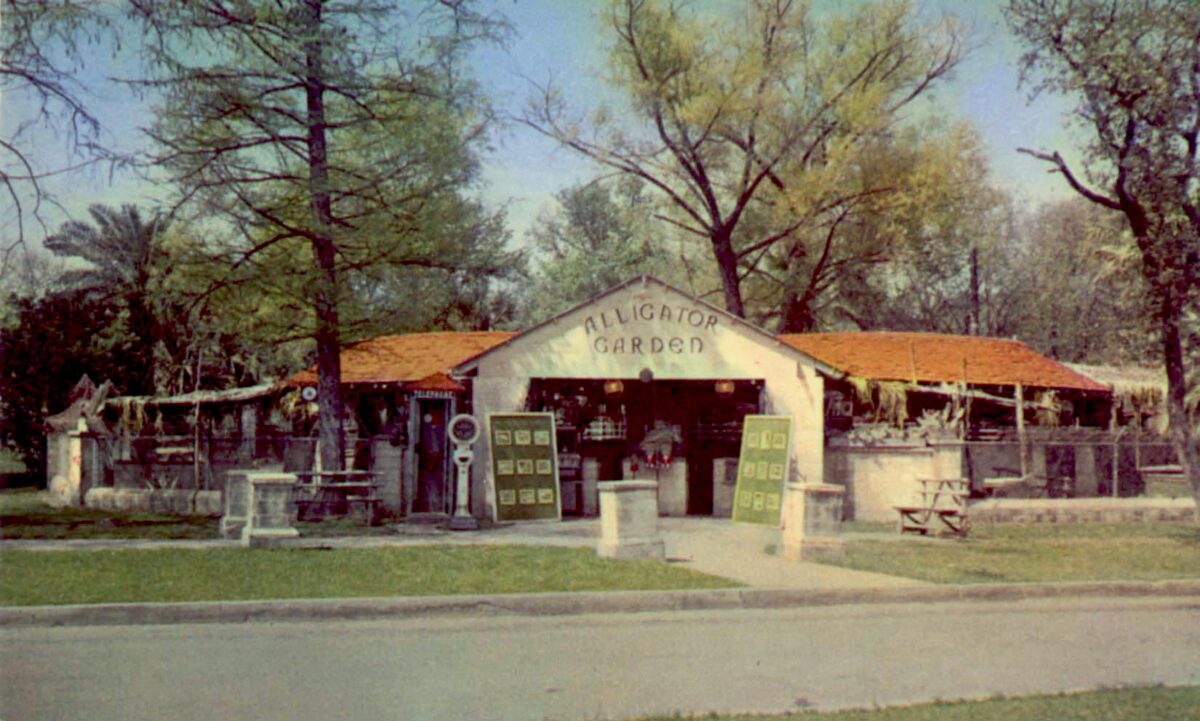
The reptile garden is located north of Pioneer Hall near the location of the Alamo acequia dam. First constructed at another location closer to the museum, it was moved twice before being rebuilt on this site in 1937. The reptile garden closed many years ago. The deteriorated roof structure has been removed, but the perimeter limestone walls with “snake apartments” and metal gate are intact. 

Alamo Dam and Acequia

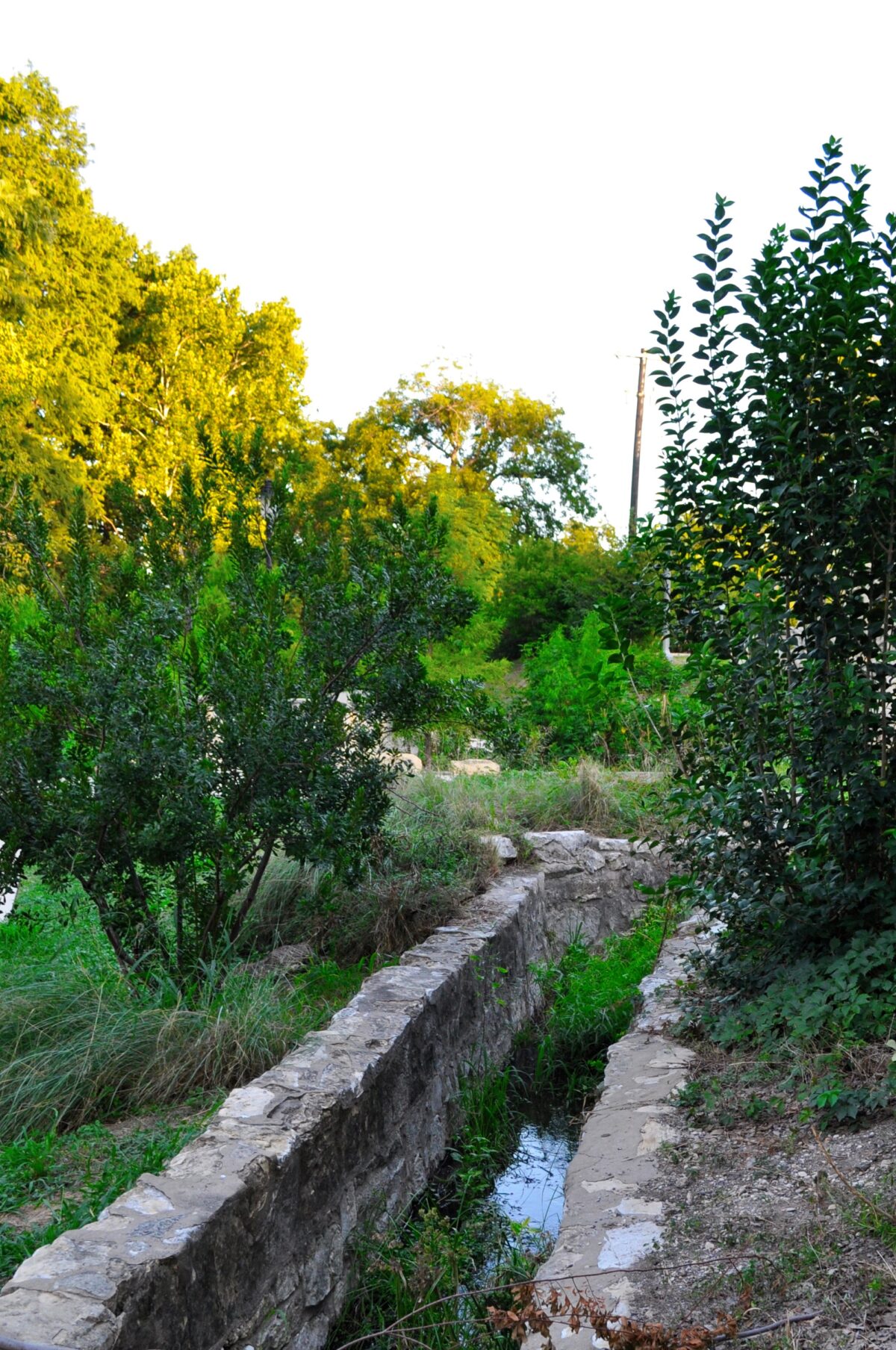
The Alamo Acequia is one of two originating in what is now Brackenridge Park. Constructed in 1719 to serve Mission San Antonio Valero, later known as the Alamo. Each acequia system began with a diversion dam that raised the water behind it high enough to flow into a cut in the bank above. The dam and acequia was badly deteriorated and could not be restored; however, the locations are delineated on the grounds of the Witte Museum and across the San Antonio River.

Koehler Pavilion

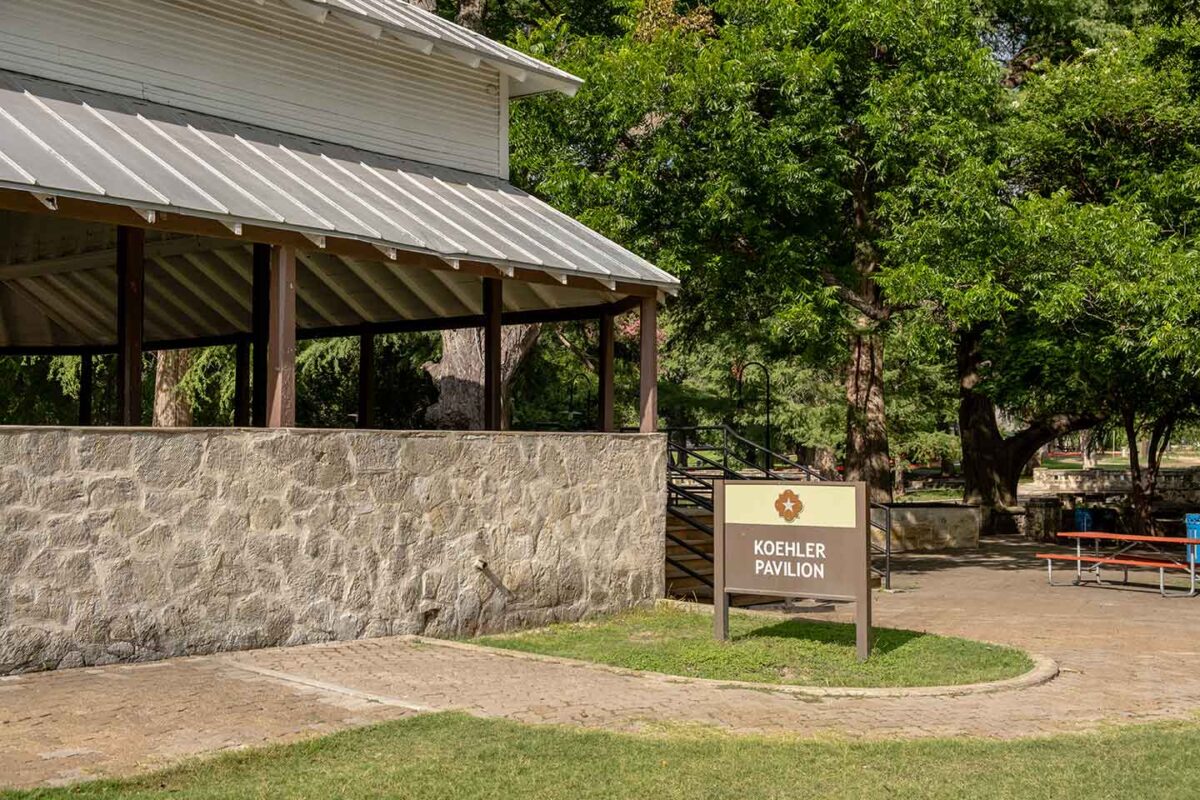
Similar to Joske Pavilion, the Koehler Pavilion is built of stone, concrete, and wood and is roofed with standing‐seam sheet metal. The overhanging roof is supported by columns that rest on stone perimeter walls. A central frame structure, covered by a hipped roof, rises in the center. The entire roofing system is supported by regularly spaced interior columns. A pavilion likely was constructed on this site shortly after Koehler Park was acquired by the city in 1915, and the perimeter wall stonework indicates that the structure dates to the period between the middle 1920s to the late 1930s. The structure was remodeled in 1982 when an adjoining concrete patio was constructed overlooking the river. 

Works by Dionicio Rodriguez

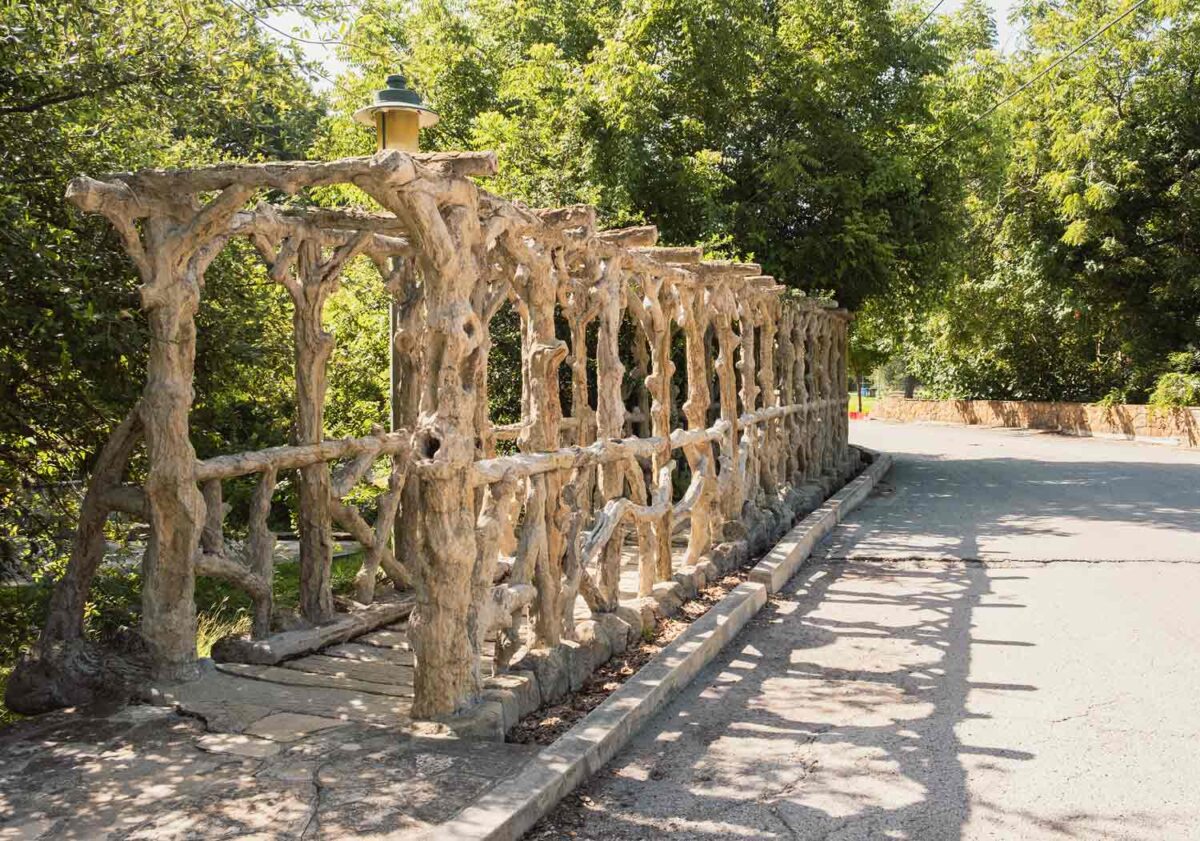
Two faux bois, meaning “false wood” in French, works by Dionicio Rodriguez are situated between the Koehler Park entry gates and the San Antonio River. The first, located close to the low water crossing, is a palapa‐roofed bench. The second is a palapa table and two benches, located just north of Koehler Pavilion. There is a single faux bois “hollow log” shelter by Rodriguez located on a walking trail immediately south of Tuleta Drive. This piece was moved to the park from a temporary location in about 2006. It is thought to have originally been located downtown on Alamo Plaza. His most significant design is the arbor bridge built across the acequia and raceway.

Train Bridge

The bridge below the pedestrian bridge is a simple iron truss structure built in 1957 as a crossing for the park’s miniature train, now called the Zoo Train. If you catch a ride on your next visit, be sure to look out for other historical sites in the park!

Picnic Area

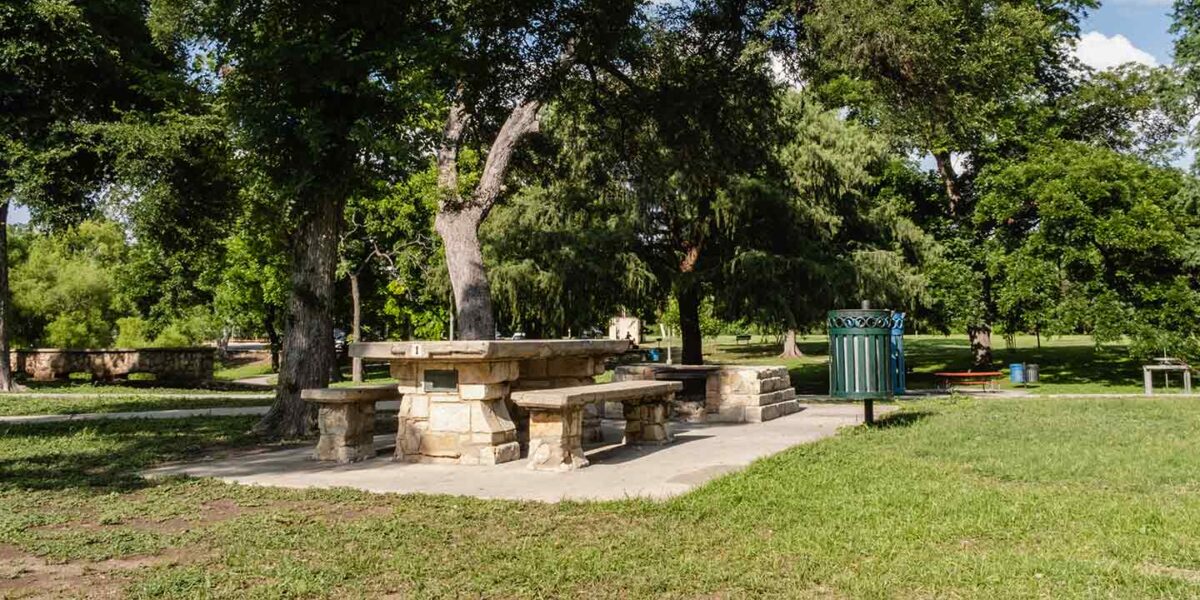
The area of the park extending to Tuleta Drive, south of Joske Pavilion, features 19 picnic units, perfect for any celebration or day in the park. The concrete and stone tables, benches, and barbecue pits—built by Works Projects Administration (WPA) workers—are scattered among the trees overlooking the river. A glazed tile number is set on the edge of each picnic table. Some tables also have an inset bronze plaque reading, “Works Projects Administration, 1938-1940.” Modern concrete pads and stone water fountains have been added.

Brackenridge Park Conservancy Park Office

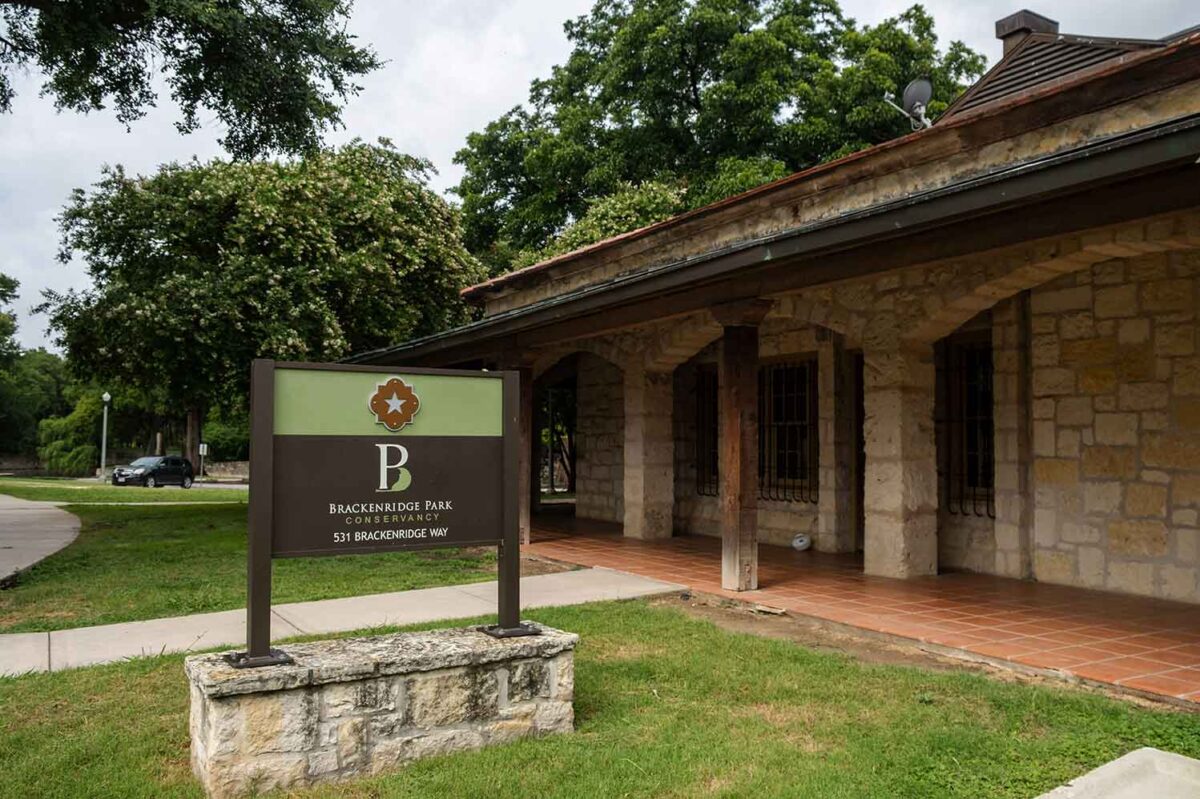
The office of the Brackenridge Park Conservancy at 531 Brackenridge Way is in the newly renovated concession building, known as the “Water Works Snack Bar,” which was constructed in 1979 by San Antonio stonemason Curtis Hunt, replacing an earlier building. 

Joske Pavilion

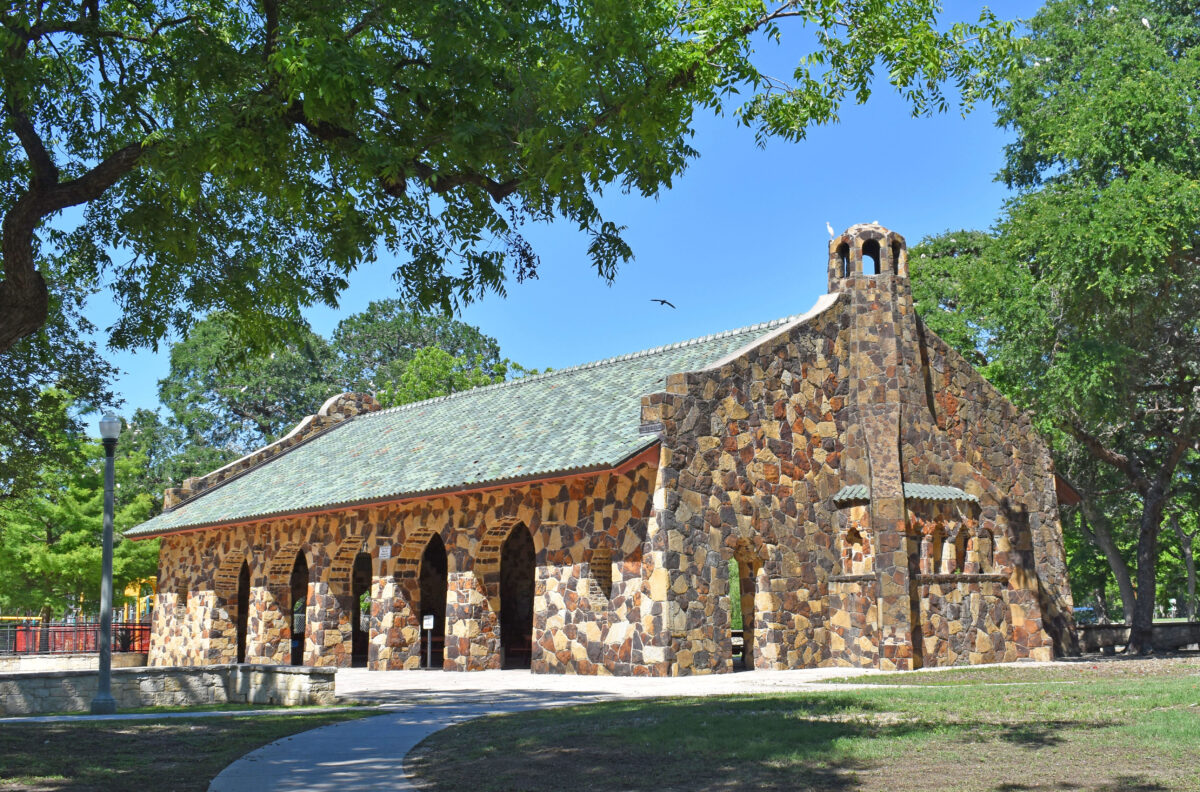
After crossing the Iron Truss Bridge, you’ll find the Eleanor Brackenridge playground and Joske Pavilion, where you may have spent birthdays or holidays. The playground, named for George Brackenridge’s sister, has been around since the 1920s. The Joske Memorial Pavilion, one of the park’s signature structures, took $10,000 to build, gifted by the estate of retailer Alexander Joske. 

The structure of dark, random‐coursed stone was designed by Emmett Jackson and erected in 1926. It has massive chimneys at the north and south ends. The chimney on the south end has a splayed base with inset, arched openings that reflect larger openings on the east and west sides of the structure. A tall chimney pot tops the structure on the south. An interior stone stairway with wrought iron railing leads to a balcony overlooking the river on the south end. The north end features a parapet in the “Alamo” style. A stone stairway with wrought iron railing accesses a second-story balcony that overlooks the playground and river. The projecting balcony is supported by round stone columns.

Pedestrian Bridge

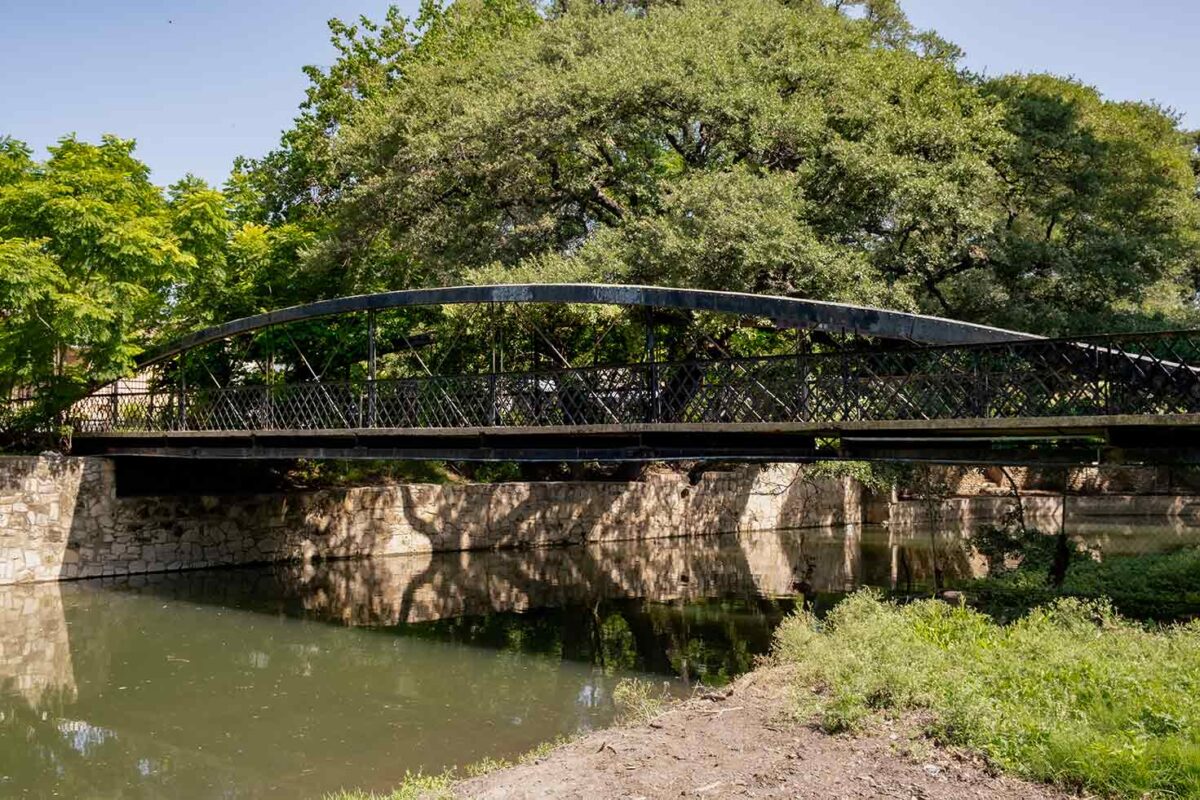
The pedestrian bridge, spanning the river below Lambert Beach, is a structure with arched iron trusses. Tall concrete stairs with curved pipe railings lead to either side of the bridge, which features metal lattice siding. The center of the bridge is the dividing line between Koehler Park to the west, where alcohol may be consumed, and Brackenridge Park to the east, where it cannot be consumed. The bridge was moved to the park in 1925 from its original location on Fourth Street at the river in the downtown area. Next time you visit, try to spot differences between this bridge and the Iron Truss Bridge!

Iron Truss Bridge

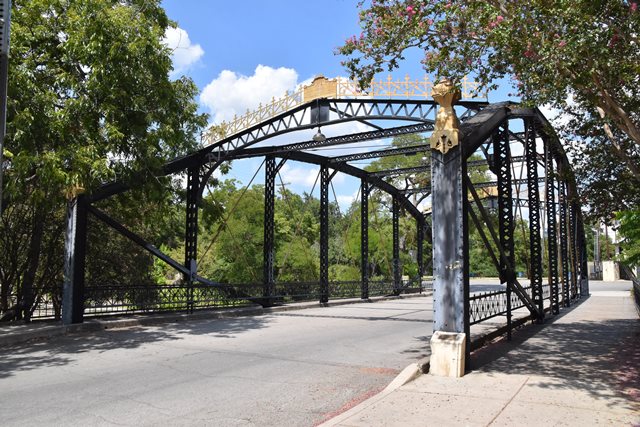
The road that crosses the San Antonio River does so on an iron truss bridge that was originally erected at a downtown site at St. Mary’s Street near Commerce Street in 1890 but was moved here in 1925. The lenticular truss bridge was manufactured by the Berlin Iron Bridge Co. The bridge is a prominent feature of the area known as “Lambert Beach,” in honor of Parks Commissioner Ray Lambert. A plaque on the bridge bears the inscription “National Youth Administration, 1937-38.” It is unclear if this refers to work done on the bridge or the adjacent retaining walls. There are various bridges in Brackenridge Park that each have their own personality! Which is your favorite?